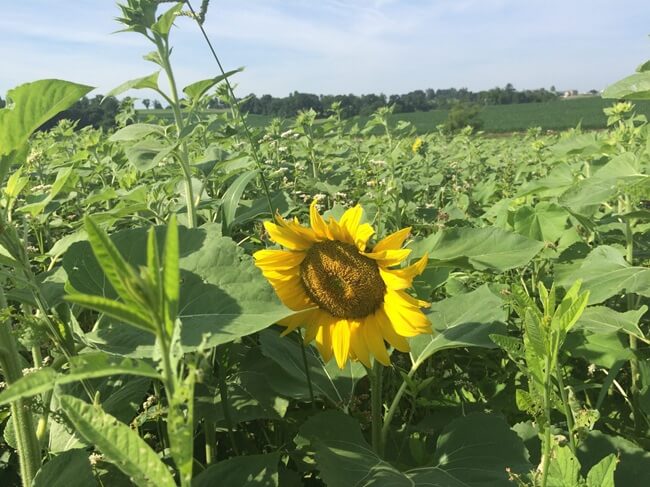
A diverse legume-forb cover crop mix of aggressively growing summer annuals, with possible dual use as a wildlife food plot. The mix includes four very different components—buckwheat, cowpeas, sunflower, and sunn hemp. These species work together to perform several functions during their brief growth period:
- Nitrogen fixation and recycling
- Organic phosphorus liberation and recycling
- Soil organic matter building/ carbon sequestration
- Other nutrient cycling and soil health building
- Summer pollinator and beneficial insect attraction
- Summer weed smother crop
- Disease and nematode break crop
Both conventional and organic growers will find this a useful break crop in between spring and fall crops that builds soil nitrogen levels and attracts pollinators and other beneficial insects. It can also be used in farmscaping strips to draw beneficials throughout the season.
Other summer annuals can be combined with this mix if more diversity is desired, such as sorghum-sudan, millet, or brassicas.
Where Summer Solar Grows Best
Summer Solar performs best in regions where warm summer conditions allow fast, vigorous growth. It fits well across the Northeast and Mid-Atlantic, where warm soils and long summer days allow the mix to establish quickly and produce strong growth before fall planting.
This mix works especially well during short summer windows between crops. Many growers use it when they want to rebuild soil structure, support pollinators, and keep living roots in the ground during the hottest part of the season.
Where Growers Use Summer Solar
Summer Solar fits easily into many vegetable and grain rotations.
Growers commonly plant it:
- Between early vegetable and fall vegetable plantings
- Ahead of fall-seeded small grains
- In farmscaping strips alongside vegetable fields to attract pollinators and beneficial insects
- As a summer soil-building break crop between production cycles
Because the mix includes several different plant types, it brings both soil benefits and insect habitat during the summer growing window.
How to Plant and Manage Summer Solar
For best results, plant Summer Solar once soils are warm and the risk of frost has passed.
A few simple guidelines:
- Planting method: Drilling usually gives the most even stand, though broadcasting can work if the seed is lightly incorporated.
- Planting window: Late spring through early summer once soil temperatures reach about 65°F or higher.
- Termination timing: Plan to terminate before the mix goes to seed, often after 45–60 days of growth, depending on your goals.
- Next crop timing: Allow a short window between termination and planting the next crop so residue can start breaking down.
These steps help the mix deliver strong soil benefits while keeping it easy to manage before the next planting.
Common Questions About Summer Solar
Summer Solar is a diverse summer annual cover crop mix designed to grow quickly during the warmest part of the season. It is usually planted in late spring or early summer once soil temperatures reach about 65°F.
Summer Solar helps build soil, suppress weeds, and keep living roots in the ground during the summer months. The mix also attracts pollinators and beneficial insects while producing strong plant growth.
Yes, Summer Solar can be used as a wildlife food plot thanks to the mix of legumes, sunflowers, and other flowering species. These plants provide forage and attract wildlife throughout the summer.
Summer Solar typically grows for about 45 to 60 days before termination. The exact timing depends on when it was planted and how much growth you want before the next crop.
The recommended seeding rate is generally 35 to 60 pounds per acre, depending on planting method and the stand you want. Seed should be planted about ½ to ¾ inch deep to ensure good seed-to-soil contact.
Summer Solar performs well across many soil types as long as soils are warm and reasonably well drained. It is especially useful in fields where growers want to add organic matter and improve soil structure during the summer.
Can I mix Summer Solar with other summer annuals for more diversity? Yes, Summer Solar can be combined with other summer annual species if you want to increase diversity. Some growers add grasses or other broadleaf species depending on their goals.
Summer Solar is designed primarily as a soil-building cover crop rather than a forage crop. For that reason, it is generally not recommended for grazing livestock.