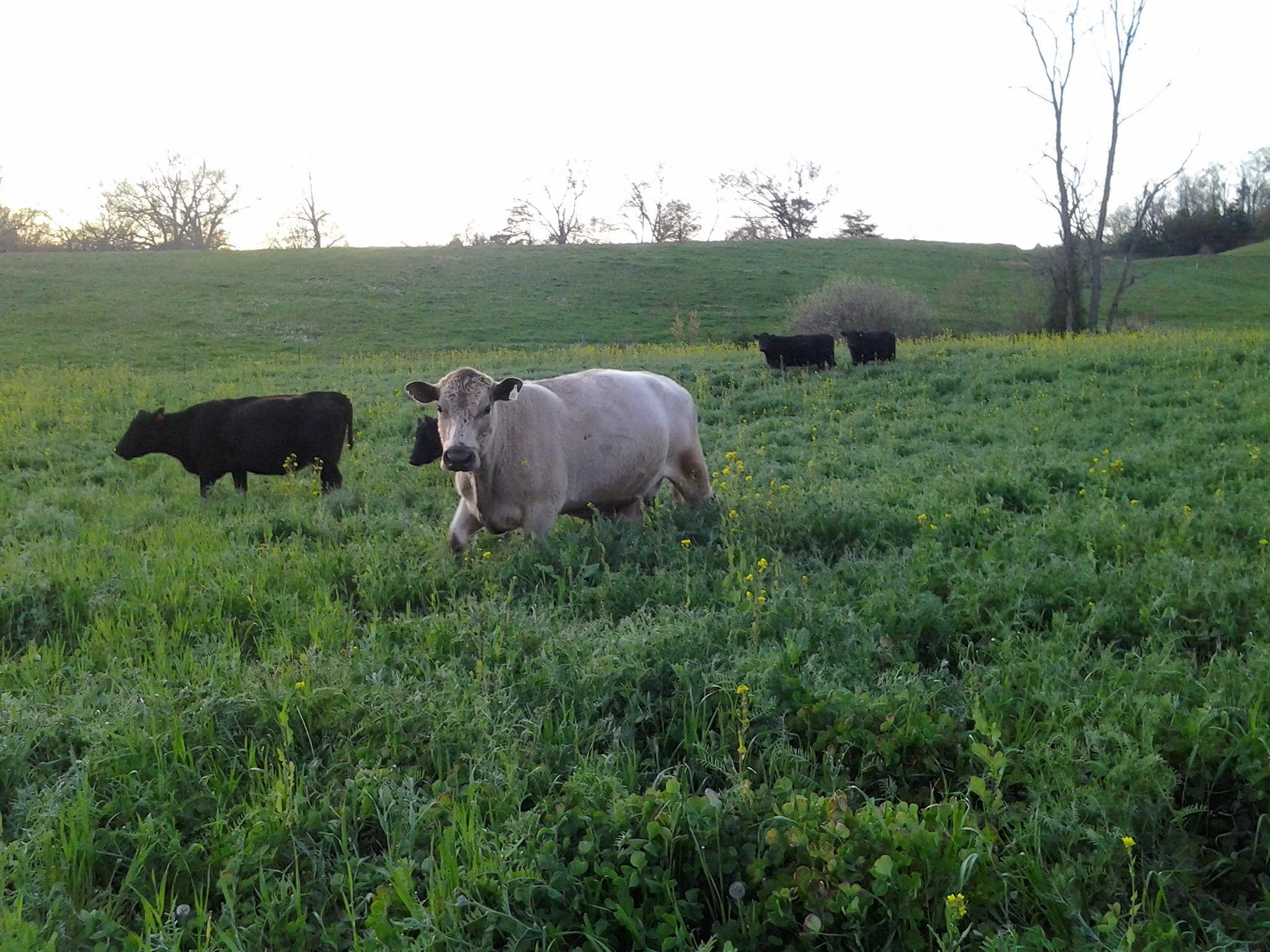
Diverse annual cover crop mix to be seeded in late summer that can double as high energy forage. For forage most of yield will be fall productions.
This is a versatile cool season mix made up of grasses, legumes, and brassicas that can be used a short-term cover crop, a soil-building transition crop to renovate depleted soils, a grazing mix, and a wildlife food plot. It also contains several blooming species that, if left to grow and flower, will attract beneficial species. The mix is beneficial for both no-till and conventional-till soils and consists of all Non-GMO seeds.
Grasses:
Oats are very fast starting and will give survival until about 20 degrees. Triticale and annual ryegrass will typically survive the winter to give a good spring cover.
Legumes:
Spring peas, hairy vetch and crimson clover typically survive the winter and fix nitrogen. N production will be maximized if the hairy vetch and clover are left to grow to bloom in the spring.
Forbes:
Daikon radish like oats are very fast starting and will survive until about 20 degrees. Turnip can survive colder temperature and quite often over winter.
Note:
Ray’s Crazy Fall Mix as a cover crop and forage improves soil health however, as with most crops it must be terminiated to prevent self seeding. If the seeding occurs, the crop maybe a weed for future crops.
Ray’s Crazy Fall Mix FAQ
Ray’s Crazy Fall Mix is most often used as a fall cover crop, but it can also be grazed or used to rebuild tired soils. It’s a versatile mix meant to do more than one job instead of just covering the ground.
It’s a diverse cover crop mix that includes grasses, legumes, and brassicas like oats, triticale, annual ryegrass, peas, vetch, crimson clover, radish, and turnips. The idea is to combine fast growth, nitrogen from legumes, and deep roots that work the soil.
This mix keeps living roots in the soil longer and adds a lot of plant material back to the field. That helps improve soil structure, manage nutrients, and protect the soil surface through the fall cover crop window.
Ray’s Crazy Fall Mix works well for grazing in the fall and again in the spring if conditions allow. While it’s not typically managed as a dry hay seed mix, livestock can make good use of the growth.
Some parts of the mix will overwinter, and some will winterkill depending on how cold it gets. That balance gives you fall cover crop protection without everything coming back too aggressively in the spring.
This mix is flexible and performs well on many soil types, even fields that need some rebuilding. It works in conventional tillage, reduced tillage, and no-till systems.
Yes, this mix provides a lot of forage and attraction for wildlife. The combination of leafy growth and flowering plants keeps food available across seasons.
Termination should happen before the mix goes to seed, usually in late spring. You can terminate this fall cover crop with tillage, mowing, or herbicide, depending on your setup.
Ray’s Crazy Fall Mix has more species and more diversity than a standard fall cover crop mix. That extra diversity gives you more flexibility for grazing, soil improvement, and rotation planning.
Yes, this mix can be no-tilled into existing residue as long as you get good seed-to-soil contact. Planting depth and moisture make a big difference with mixed species.